Tuesday, 5 February 2013

'The Gaze' Study Task 2


The company American Apparel are famous for their outlandish, over sexualised advertising campaigns – many of which often end up banned due to a substantial amount of complaints against the images that are used.


However, the images used provide an interesting insight into Gaze Theory within the media and advertising today. Through this analysis, I will compare the image from an American Apparel campaign pictured and it’s reaction from the theories of the gaze and ‘The Look’ by Rosalind Coward.


The male gaze appears when the camera puts the audience in a position that they are the eyes of a man looking at the subject. For example the focus may be on the figure or nude body of a woman. The image is cropped so the main focus is on her body, rather than her face or personality traits. The woman pictured in usually photographed in a way that she is seen as an erotic object or powerless to the male (the gaze).

"Womens inability to return to such a critical and aggressive look is a sign of subordination" (Coward 2000) 'subordination' 1. Belonging to a lower or inferior class or rank; secondary. 2. Subject to the authority or control of another.

In this advert pictured the girl is laid on a bed with her legs spread, the text to the right of the image reads ‘now open’. As in the male gaze this is immediately related back to the womans spread legs, this then brings on the sexual thought that she is ‘open’ for sex, teamed with the ‘home photo’ style of the shoot it demoralises the woman in that she is an erotic object. "Peeping Toms can always stay in control" (Coward 2000) the idea that the viewer (the male gaze) is seeing the woman in a place of intimacy, but has the power of the situation and being able to be there.


Her expression is innocent with a hint of fear and vulnerability it is almost as if she wants to look away but her gaze is stunted by the over rule of the male; the male gaze is in control and holds power over her in a sexual sense. 


Adverts such as this can also represent the way women see themselves, or other images. They begin to look at themselves through the ideals of the male gaze – sex and exposure sell, and it is what is ‘ideal’ therefore desirable. "Critical glance of the cultural idea" (Coward 2000)


Coward suggests in her writing that there are so many unrealistic images of women in media and advertising as it is a manly male dominated area, the images are controlled and produced by men. "Men who produce the pages will continue to build their power on the decorative excess of the women who are pictured on them" (Coward 2000)


In society today and the media, it is unwritten rule that sex sells, from cars to perfumes the over sexualised images are often used. This creates a disjointed and confused view in society on the ideals and what we should conform too. We are in a world where the explicit pornographic pictures of women in the media are the norm, this only boosts to use the idea what males need to be in control from the viewing perspective. "obsessive recording and use of women's images in a way to make men comfortable. Clearly this comfort is is connected with feeling secure or powerful" (Coward 2000)


Tuesday, 22 January 2013

Anonymous


" Hello, Scientology. We are Anonymous.

Over the years, we have been watching you. Your campaigns of misinformation; suppression of dissent; your litigious nature, all of these things have caught our eye. With the leakage of your latest propaganda video into mainstream circulation, the extent of your malign influence over those who trust you, who call you leader, has been made clear to us. Anonymous has therefore decided that your organization should be destroyed. For the good of your followers, for the good of mankind--for the laughs--we shall expel you from the Internet and systematically dismantle the Church of Scientology in its present form. We acknowledge you as a serious opponent, and we are prepared for a long, long campaign. You will not prevail forever against the angry masses of the body politic. Your methods, hypocrisy, and the artlessness of your organization have sounded its death knell.

You cannot hide; we are everywhere.

We cannot die; we are forever. We're getting bigger every day--and solely by the force of our ideas, malicious and hostile as they often are. If you want another name for your opponent, then call us Legion, for we are many.

Yet for all that we are not as monstrous as you are; still our methods are a parallel to your own. Doubtless you will use the Anon's actions as an example of the persecution you have so long warned your followers would come; this is acceptable. In fact, it is encouraged. We are your SPs.

Gradually as we merge our pulse with that of your "Church", the suppression of your followers will become increasingly difficult to maintain. Believers will wake, and see that salvation has no price. They will know that the stress, the frustration that they feel is not something that may be blamed upon Anonymous. No--they will see that it stems from a source far closer to each. Yes, we are SPs. But the sum of suppression we could ever muster is eclipsed by that of the RTC.

Knowledge is free.

We are Anonymous. We are Legion. We do not forgive. We do not forget. Expect us. "
 

Anonymous' main twitter was hacked by 'rival' group Rustle League, a team of 5 who are just in it for the 'Lulz'.

Hacking group Anonymous latest victim of Twitter hack

Wednesday, 16 January 2013

Panopticism In Modern Society

Whilst researching panopticism, I found this article on CCTV within towns and cities, originally published in 1995 by Stephen Graham, John Brooks and Dan Heery, Centre for Urban Technology.

The article was written around the time that CCTV was becoming a must have for authorities across the world. According to the article, CCTV was praised and welcomed by the masses and notably one case in particular which sparked off the sensation, the murder of James Bulger.

James Bulger was abducted and murdered in Bootle, Liverpool, in 1993. CCTV caught the pair of 10 year olds abducting Bulger, aged 2, before he was beaten and murdered.

This was key publicity for CCTV, showing clear benefits to it's installation which had also previously been viewed as beneficial.

The article goes on to mention how the public views CCTV,

"But these aggregated statistics need to be treated with caution. They are likely to mask a complex picture of public reaction. For example, young men are much more suspicious of the systems because they feel more at risk from the potential negative effects of CCTV (Honess and Charman, 1992; Centre for Research on Crime, Policing and the Community, 1993). Karen Evans found recently that many black males already feel excluded from shopping malls where they experience intense scrutiny from security guards (Evans, 1995). In many shopping malls and other 'private public spaces' there is already "a heavy concentration on the exclusion of 'undesirable' young people" (Sparks, quoted in Mi hill, 1993). Women have also been found to be more concerned than men about the civil liberty implications of CCTV. Moreover, whilst they may support CCTV in reducing petty crime, young women have also been shown to doubt the effectiveness of CCTV in actually preventing physical and sexual assault compared to other measures such as improved street lighting or increased police patrols (Honess and Charman, 1992; 11)."

Although I have not read the referenced articles I find the quotes used to be very interesting. From this paragraph I see CCTV makes certain people who would be classed as a 'nuisance' or a 'trouble-maker' and feel although they are, to at least some extent, the ones being 'watched' as such. Especially with the reference to black males feeling already excluded from shopping centres due to their skin colour providing adequate information on them as a person upon which they are judged and surveyed.

Personally, I'd say that crime is feasible in all cultures and generations, with no focus at all on ethnicity and a obvious bias towards the youth.

CCTV's main involvement in society is as a deterrent, which is a form of panopticism in modern society, even if no one is watching the other side the presence is very prominent.

Media Activism

" Media activism is a broad category of activism that utilizes media and communication technologies for social and political movements. Methods of media activism include publishing news on websites, creating video and audio investigations, spreading information about protests, and organizing campaigns relating to media and communications policies. 
 
Media activism can be used for many different purposes. It is often employed by grassroots activists and anarchists to spread information not available via mainstream media or to share censored news stories. Certain forms of politically motivated hacking and net-based campaigns are also considered media activism. Often, the focus of media activism is to change policies relating to media and communications.
 
Social media is often used as a form of media activism. Because of the interactive features and widespread use of social media, it is able to quickly disseminate information and rally supporters.Platforms like Facebook and Twitter can reach a much larger audience than traditional media. Although often only a small percentage of people who express interest in a cause online are willing to commit to offline action, social media interaction is viewed as "the first step in a ladder of engagement."
 
Culture jamming, another form of media activism, is a subversive strategy of protest that re-appropriates the tropes of mainstream media "in order to take advantage of the resources and venues they afford." "

This is quoted from Wikipedia, although the source can never be too reliable, it gives a good overall portrayal of 'media activism' an area of activism I am most interested in.

Hacktivism is probably the best known form of media activism, related to groups such as Cult of the Dead Cow, formerly Omega, and the most notorious Anonymous.

In the eyes of some hacktivists, the work they take out is for the greater good and other would disagree and say that their intentions were simply to destroy things.

Thursday, 10 January 2013

'Century of the Self' Task 1

  1. The way business can make us want what we don’t need, product linking to our unconscious wants/fears – the ideal life/self.
  2. We become docile characters when we are satisfied – easily led.
  3. People use their impulses to make decisions – not rational.
  4. Emotional desires and irrational feelings/needs – meaningless objects can become symbols of personality traits – expression through things they buy.
  5. Politicians play to our unconscious fears.
  6. Men who fought in the war and suffered post war mental trauma was brought on not from the fighting but often from emotional traumas caused in childhood – attacking their venerable state of mind.
  7. Analysis of the psyche – make society a better place the ‘happiness’ of people became important, slightest unhappiness was a cause for concern.
  8. People seek affection in their peers – affections/attentions they didn’t get from their parents – unconscious phobias of loneliness.
  9. Peoples fear can become a weapon, instead of consoling and helping against fear – fear was wanted, manipulation techniques used – fear is a way to control and anger therefore a weapon.
  10. Politics now appeals not just to out rational feelings but to our unconscious feelings, the need and want.
  11.  
     
Image analysis – consumerism, desire and the unconscious


MAC make-up / Barbie collaboration advert.

This image relates to consumer culture, desire and unconscious because it shows the way advertising is designed to appeal as a reaction to women’s unconscious insecurities. In the advertisement there are two models, both overly airbrushed to look like Barbie, this would play to the women viewers unconscious on what is deemed to be perfect and beautiful, thus they will want to buy the product to satisfy their needs, making them feel perfect. Much like the key points from century of self, the advertisement can work in a way to trigger emotional desires of the consumer into feelings of need and want – they feel that if they buy the product, it will act as a symbol to something that they feel they are lacking, in this instance, beauty. Consumers are people who buy products, which stem from a ‘need’ to have the product in their life, though it is not a necessity, it won’t make the consumer any more beautiful, successful in reality – but may enhance there confidence as they feel they are no longer lacking something. The women who are looking at the advert most likely do know the images are airbrushed, but in the short space of time a consumers mind goes from looking to want to needing, it doesn’t process all parts of the advertisement, simply see then want. We live in a society where people buy to fill the void feeling as if they are missing something, through disposable products and fad fashions.

Patrick Hruby


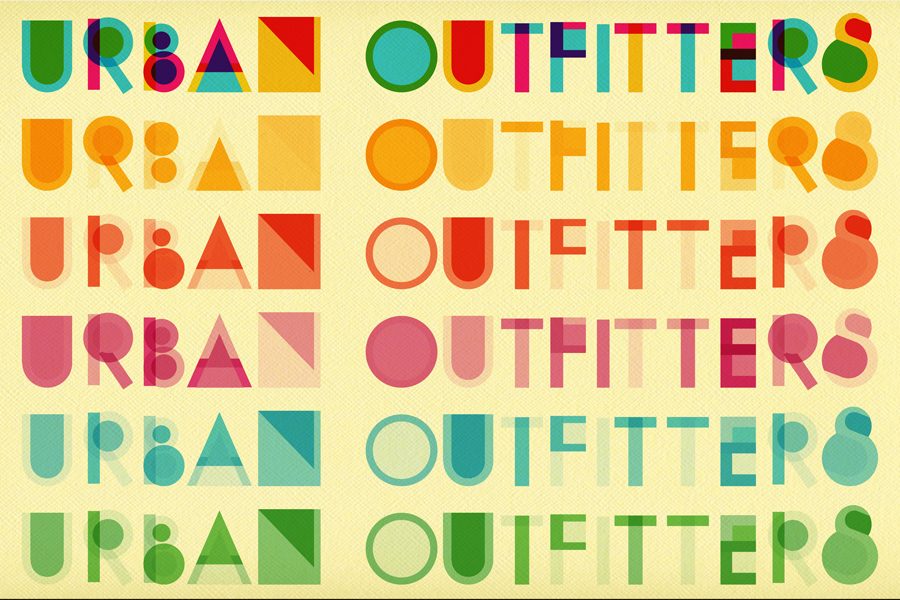
Patrick Hruby is an illustrator that I found out about over summer. He works with bold colours primarily and marries basic shapes to form letter forms amongst vector based illustration.


despite Islands being an amazing band, the poster and concept works well for them matching playful colours with playful music and use of a gem which is a reference to 'Rough Gem' I'd have thought.

Well worth a watch and check out Patrick Hruby.


Monday, 7 January 2013

Anonymous, the Hello Kitty of Hacktivism

" If you think hacktivists are a problem now, just wait. The tools are becoming increasingly easy to use, and the hacktivists increasingly stupid — making everyone a target. "

Article